

When the morning bell rang, the road repairman Frank was not working.
He sat on the threshold of his house and looked across the street. A group of skeletons is spreading the slate quickly and flatly, and the ribs are still stained with last night’s dirt. The leader turned his head — if that counts — his empty eye sockets swept over Frank, and then turned back to continue working. There was no breathing sound, only the clicking sound of bones rubbing.
My city is waking up. The chimney in the bakery was smoking, but it was three hands with varying degrees of rot to knead the dough. On the construction site, the zombies are passing bricks, moving neatly like clocks. The laundresses gathered by the well and watched the clothesline hang the wet clothes by themselves — the other end of the rope was tied to a ghost’s waist.
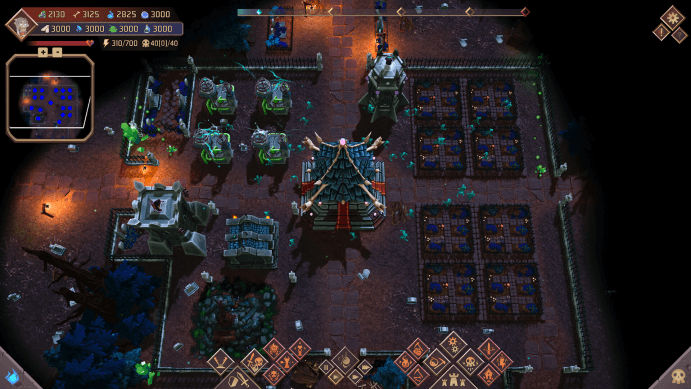
At first, everyone was very happy. The road was repaired overnight, and the wells were dug quickly and deeply. During the harvest, the skeletons in the field could be harvested continuously for three days and three nights without rest. My town hall vault has never been so full. Until the owner of the funeral home came to me.
“Mayor,” he rubbed his hands, “only two funerals were held this month.” He looked out of the window and saw a zombie sweeping the street slowly dragging his steps. “People now directly... reuse it.”
Then there is the bishop of the church. He stood among the hard-working spirits, and his white robe was blown by the wind. “They are working,” he said, “but they should have rested in peace.” When a zombie carrying wood passed by, the bishop took a step back, although the zombie would not touch him at all.
The apprentice of the blacksmith’s shop also came and carefully asked if there was any other job. The master said that he can’t use a dead cow to make iron now. He is strong and not afraid of being hot. He lowered his head and kicked the stone, “I have studied for seven years.”
I began to pay attention to some details. In the tavern, the living waiter’s hands will tremble slightly when pouring wine for the skeleton guests — although the skeleton does not drink at all. The children in the kindergarten would look at the skeleton sweeping the floor outside across the fence. One child cried and said, “It has no face.” What silenced me the most was the cemetery keeper. He is now sitting in the half-empty cemetery all day, drawing gold for the tombstones that have not been dug up.
The conflict happened on a rainy day. Several young people and a team of zombies transporting goods met in a narrow street. Zombies won’t give way, and young people won’t. During the push, a zombie’s arm fell off, and he still held the wooden box in his arms tightly. The leading young man suddenly turned pale. He picked up the arm and wanted to press it back, but his hand was shaking. Finally, they retreated to both sides silently and watched the zombies without arms move on, and the box was held by their companions.
I stayed at the city hall until late that night. The ledger is perfect: the efficiency is improved by 300%, the salary expenditure is zero, and the accident rate is close to zero. Perfect like a grave.
I’ll try to make some adjustments. It is stipulated that the dead are not allowed to engage in child-related work, subsidies are issued to the replaced workers, and a monument “commemorating all workers” is erected in the square — the names of the living and the dead are engraved together. The owner of the funeral home turned into a “mortuary cosmetology and reemployment counseling”, although it sounds a little strange.
At the end of the game, I patrolled the city. The living master of the bakery is teaching a skeleton how to squeeze a more beautiful bread pattern — although the skeleton has no sense of smell. The apprentice of the blacksmith shop was painting and decorating the immortal cow, saying, “It looks better.” The cemetery guard is now responsible for managing the “labor dispatch” and saying softly to the spirits who set out to work every morning: “Thank you for your hard work.”
When it started to rain again, I saw Frank wearing a new raincoat, commanding a team of skeletons to dredge the ditch. His movements are very light, and he will reach out to block the drooping branches to prevent the skeleton from hitting them — although they don’t need it.
The city survived in a way that no one expected. The dead do the work of the living, and the living learn to be friends of the dead. The economic accounts are beautiful, and the moral books are full of traces of correction.
I quit the game, and the real city outside the window was squirming in the evening rush hour. After every car light is a living person rushing home. I suddenly remembered the silent workers in the game. They never got stuck in traffic, never complained, and never asked themselves why they were still working.
Perhaps every era has its “spirit” — those things created by us to replace ourselves. And the real test is never whether technology can be realized, but when the bell of efficiency rings, can we still remember to find something new for the funeral home owner who lost his job, gently block the branches for the skeleton sweeping the street, and write a little warm and inefficient footnote on the edge of the perfect account book.