

The dust in the attic has weight on the screen.
When I opened the virtual wooden door, the small particles slowly increased in the light column through the crack of the blinds. Thirty-two years have passed, and my grandmother’s attic is still the same as when I left my childhood. The box is open, and the old stuff is outside the border. Time does not pass here, but sinks. My job is not to explore, but to become a humanoid sensory recorder — to save a forgotten summer with a brush, a recorder and this notebook destined to finish.
The first thing that touches me is not the image, but the sound. The game asked me to set up “headphones”, but actually I just pressed a button. The world suddenly sank to the bottom of the water. I heard: the dull flowing river in the distance, the wind blowing through the roaring friction of the poplar leaves and the small buzzing of a bee banging against the window glass. The ambient sound of that summer of thirty-two years ago, like a layer of transparent amber, suddenly enveloped me. I just stopped to hear an explosion of bicycle clocks slowly disappearing from a distance. The memory turned out to have background noise.
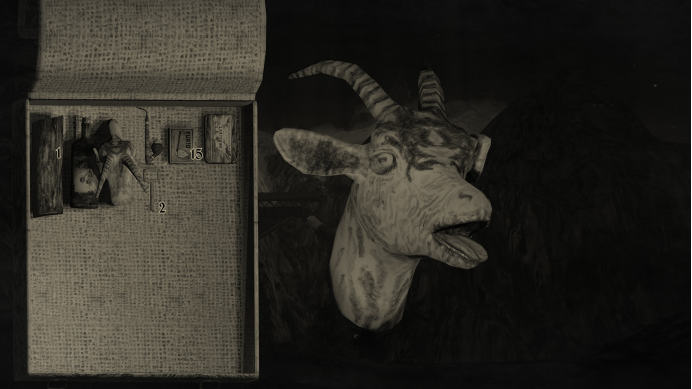
Real exploration begins with touch. The mouse has become my hand. I dragged an open box, which was scattered with faded postcards, dried wild flowers and a rusty key. There is no list in the game, and there is no warning for “collectibles +1”. I really need to “use” them: put the postcard near the virtual table lamp and identify the vague date of the stamp on the back; put the wild flower in the notebook and color it with any number of watercolors — I chose the wrong gray-green, and the petals looked sickly under my pen, but that’s exactly what I can seem to know in my memory. At that moment I realized that what I was drawing was not an object, but my impression of it. That must be inaccurate.
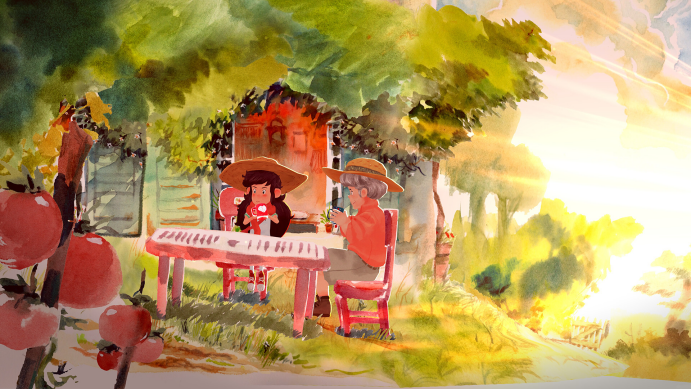
The core of the game is a blank diary. When I wake up every day, I have to choose a theme for this day: “River”, “Tree House”, “Storm” or just “grandma”. Then live with this word. If I choose the tree house, all the interactions of the day will be painted with the color of the exploration: the cracking of the climbing will be clearer and the treasures found will be more magical. When I choose “grandma”, the sound of her cooking, the buzzing clip and the rhythm of mopping the laundry becomes the main theme of the day. The diary is not a record after the position, but a lens of experience.
The most refined is the scent simulation. How does the game show the smell? He uses the most awkward and clever method: associating words and colors. When I find a canned peach hidden by my grandmother, “You smell the sweet smell of peaches” will not appear on the screen. Instead, my diary automatically turned the page and a line of handwritten font appeared: “Smell: The moment the rust is unscrewed, the sweetness is bright yellow, with a little dust.” Then the background color of the entire page will light show the unique bright yellow I just set. The scents are not smelled, but translated and encapsulated. Later I looked in the diary. These records about “the smell of the sun-dried duvet is cute beige” and “the smell of dirt after the rain is dark brown and moist” brought me back to that moment brighter than any real photo.
As the game progresses, what I collect are no longer items, but fragments of the senses. An engraved fairy tale that my grandmother fell asleep halfway through; a “sky for the storm” watercolor that I painted dark purple; an old radio station that I couldn’t fix and kept racing. They filled the notebook, but made the image of that summer more and more fragmented. The more details I have, the further the little girl named Nora and her full summer will be mine. The process of recovering memories is in itself a soft loss.
At the end of the game, I didn’t solve any important family secrets. The attic is still the same attic, but there is still a full notebook. On the last page I looked at the blank drawing paper and had to choose the final color for this summer. I mixed all the shades used — the blue of the river, the green of the poplar, the yellow of the peach and the light gray of grandma’s apron — I pressed them all on the color plate and randomly mixed them. Finally, an indescribable, blurred warm brown color has been obtained. I covered the whole page with it.
After leaving the game, I sat down at the computer and zoned out for a long time. Then I got up, walked to the closet in the house, squatted down and went looking for him. I found an old tape, a children’s camera that had long been dead and several work folders full of scribbled words. I didn’t try to solve them. I just touched the dust that was deposited on it and then carefully put it back.
Dordogne gave me no truth about the family. That gave me a key to open the sensory chambers locked in my own memory. It makes me believe that the bond between us and the past is never a clear plot, but a useless, but extremely stubborn sensory fragment: a specific angle of light, a sudden change in the wind direction and the speed of melting fruit candy that has long been stopped on the tip of the tongue.
And all our lives can constantly choose colors, record sounds and define scents for our invisible sensory notebooks. Until one day, when we also become a summer that gradually disappears into the memory of others, these blocks of sealed colors and sounds become the only silent coordinates we have existed in the river of time.